English Content
What Does It Mean to Be One People?
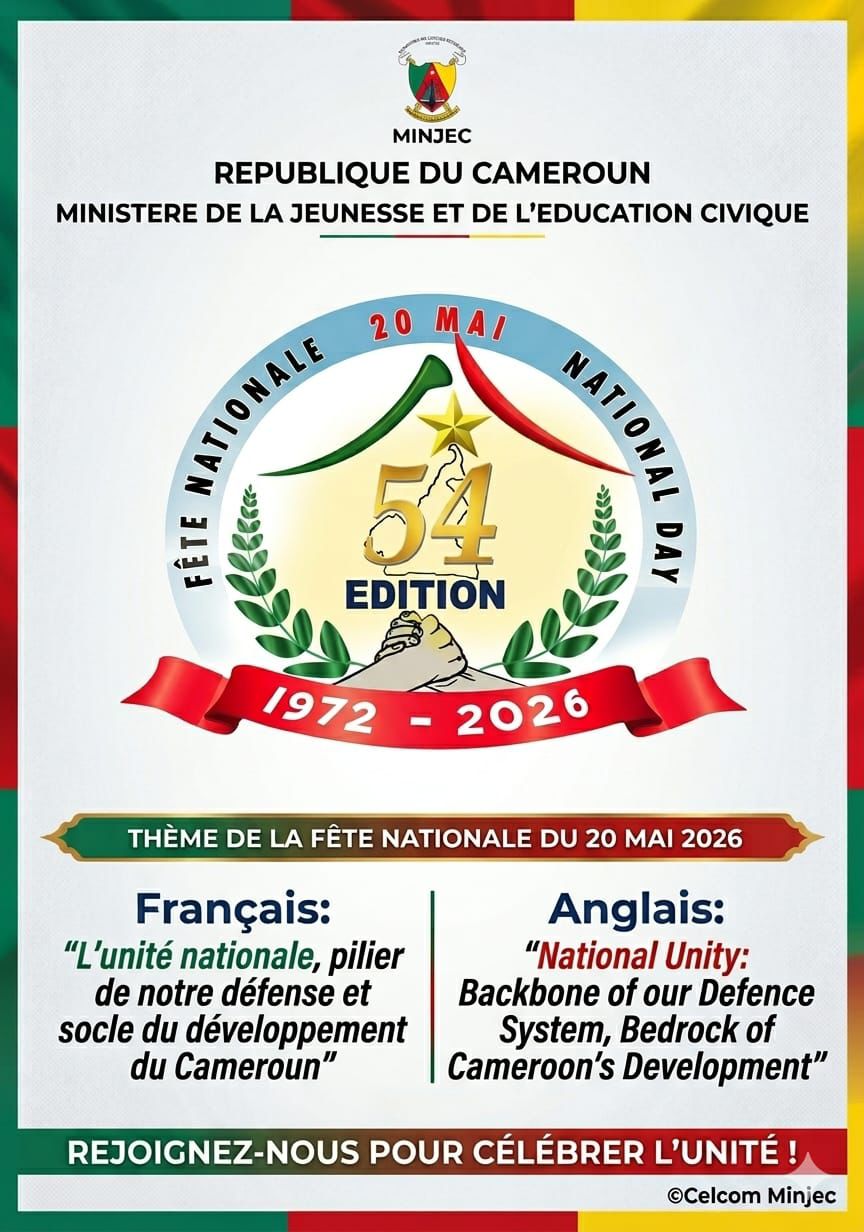
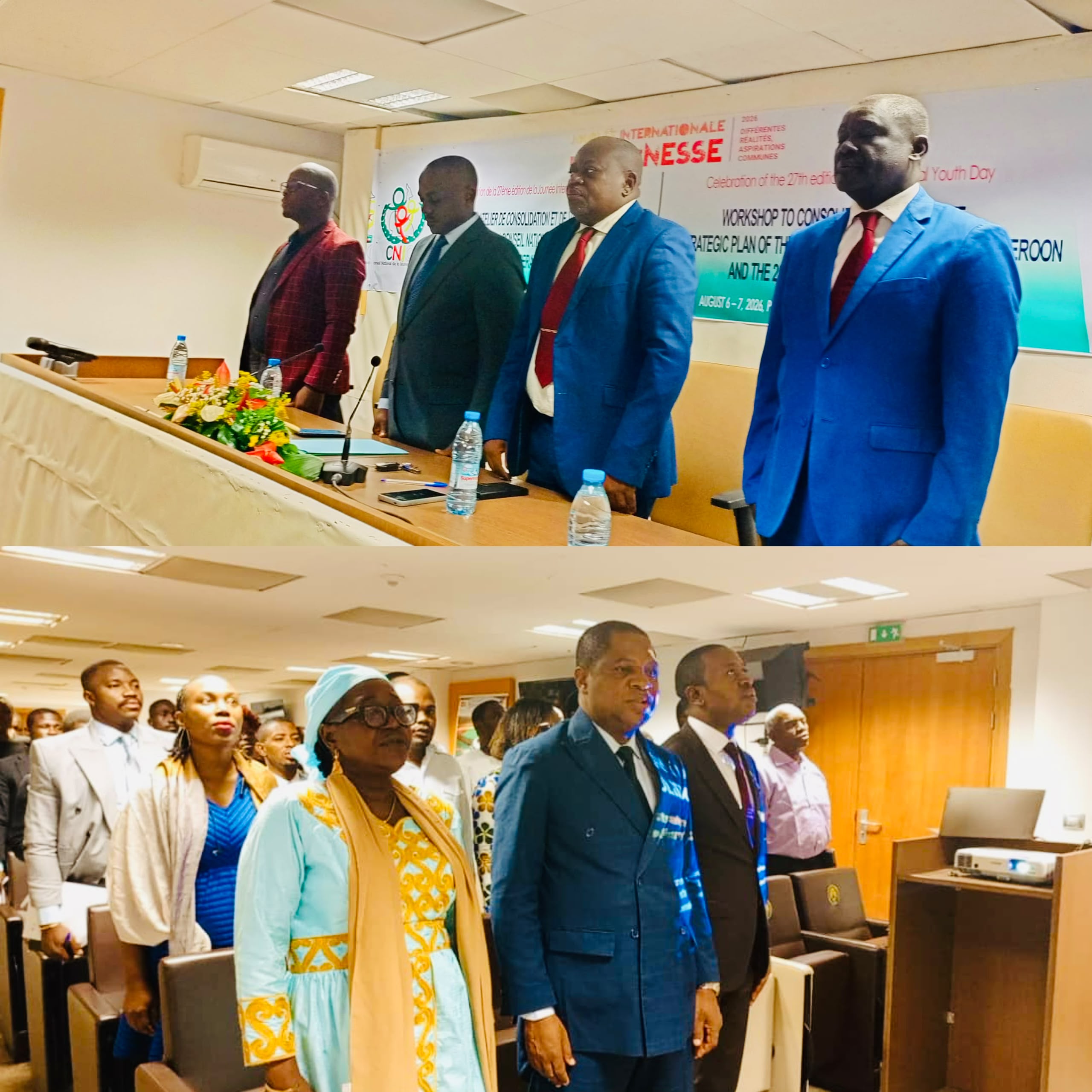
Reflections on the 2026 National Youth Day Theme
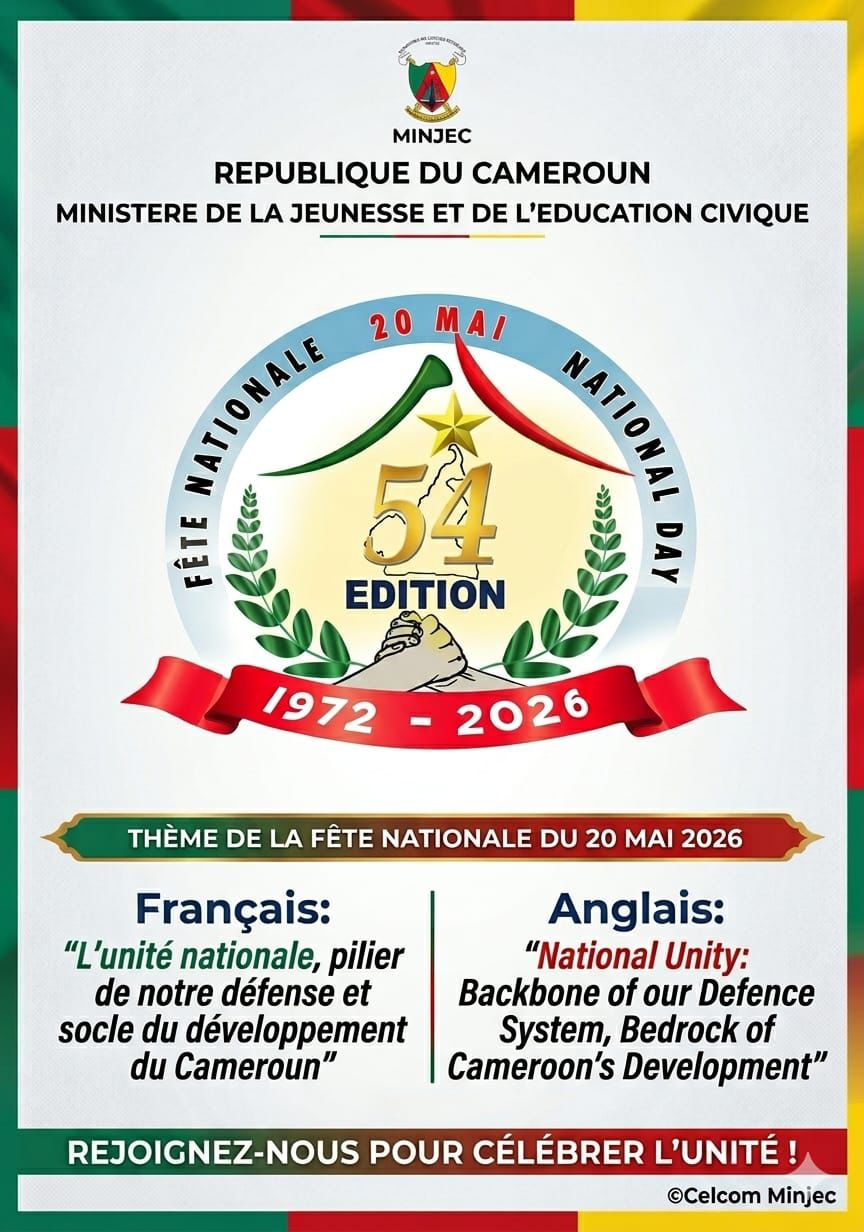
"National Unity: Backbone of Our Defence System, Bedrock of Cameroon's Development"
Cameroon is called "Africa in miniature" for a reason. Hundreds of languages, rainforest and savannah, Christian south and Muslim north, Anglophone and Francophone communities bound together under one Republic. That diversity is one of the country's genuine assets. But it demands something from its citizens a daily, conscious choice to share the country rather than fracture it.
That is what the 2026 National Youth Day theme is about. Not a slogan, not a ceremony. A question: can we be one people despite our differences? And a challenge: what are you specifically you, as a young Cameroonian willing to do about it?
Unity is not uniformity
Many people hear "national unity" and assume they are being asked to flatten themselves to stop speaking their mother tongue, to stop feeling attached to their region, to perform a nationalism that erases everything specific about who they are. That reading is wrong. A Beti, a Fulani, a Bamileke, and an Anglophone Cameroonian do not have to become the same person to be citizens of the same country. They have to be willing to share a country. That means treating each other's lives as equally worth protecting and each other's communities as equally worth investing in.
Young people are often the ones pressured to choose sides in ways that serve other people's political interests. Someone who loves their region deeply is not the same as someone willing to harm a fellow citizen from a different one. Civic loyalty and ethnic identity are not opposites. The confusion between them deliberately manufactured in some cases is one of the oldest tricks in the book.
Why "backbone" and why it matters
The theme doesn't say unity supports national defence. It says unity is the backbone of it. That distinction is worth sitting with. A divided nation is easier to destabilize not because it lacks weapons or soldiers, but because it lacks the social trust that makes institutions function and communities resist manipulation. Disinformation spreads through fractures. Extremism finds recruits in communities that feel humiliated or abandoned. Rumours about atrocities move faster when people already distrust the other side.
The choices young Cameroonians make on social media whether to share an inflammatory post or pause and question it, whether to answer a slur with another slur or refuse the escalation are not just personal decisions. They ripple outward. Patriotism, understood this way, is less about grand declarations and more about consistent small choices to not make things worse.
Development cannot happen in a divided country
Development requires coordination across communities and institutions. It requires that people who built something this year believe it will still be standing next year. It requires that a policy designed in Yaoundé can actually reach a farmer in the Far North without the chain between them being broken by mistrust and competing loyalties. When unity is weak, projects stall not always because of money or technical capacity, but because communities that don't trust each other can't agree on where resources go, or who benefits.
The economic cost of sustained division is enormous, and it is almost never fully captured in official statistics. The 2026 theme connects unity to something concrete: whether people's material lives improve. That is not an abstract claim. It is a description of how countries actually work.
What this asks of young Cameroonians and what the country owes in return
The theme doesn't ask young people to pretend Cameroon has no problems. The country has real challenges the Anglophone crisis, unemployment, inadequate services, corruption. These are not invented grievances, and acknowledging them is not division; it is honesty. What the theme asks is that these problems be confronted in a way that keeps the country intact. That disagreement about how to fix things doesn't harden into hatred of the people associated with the other side.
That is a harder ask than it sounds. Young people who advocate loudly for change, who hold leaders accountable, who refuse injustice they are not threats to unity. They are often its defenders. The threat to unity is not protest. It is the willingness to harm fellow citizens in the name of identity.
But the relationship has to go both ways. Young Cameroonians are being asked to invest in a country that doesn't always invest back. That tension is real. What would it look like for the state to honour its side? Jobs that don't require connection to the right family. Educational institutions that actually teach. Security that protects all communities equally. Young people who feel the relationship is genuinely reciprocal are far more likely to invest in it.
The quiet work of unity
Most of what holds a country together doesn't happen in speeches. It happens when a student treats a classmate from another region with the same respect they'd show someone from home. When someone encounters an inflammatory post online and decides not to share it. When a teacher explains the country's history including its uncomfortable parts without turning any community into a villain.
These are small things. They don't make headlines. But they are the texture of social trust, and without them, no official rhetoric changes anything. The 2026 theme is asking whether this generation will choose to be its builders not its audience.
Long live the youth of Cameroon. Long live the Republic.
For more information, join our WhatsApp channel: https://whatsapp.com/channel/0029VaDsCD7A2pL4KYws8i2q
Gallery